
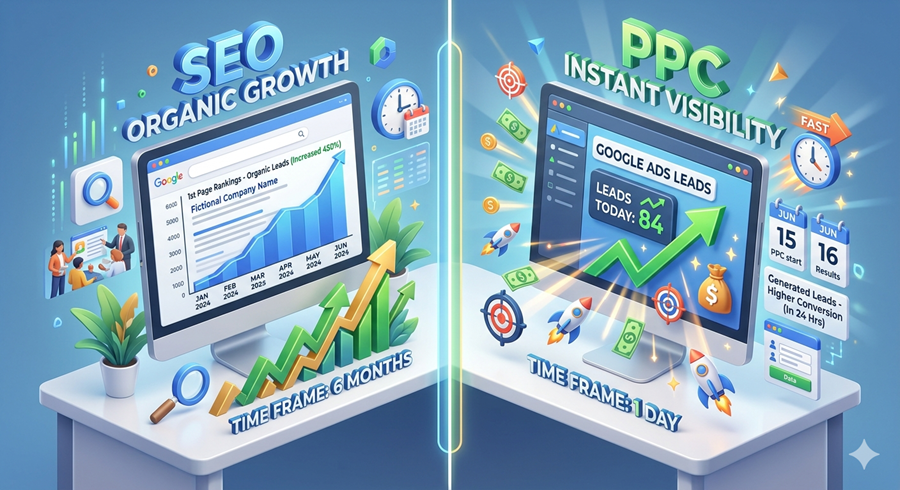
Choosing how to grow your business online is a significant decision that often feels like standing at a crossroads. You want results, but you also want to ensure your investment builds a lasting foundation. When considering seo vs ppc, the debate usually centers on these two heavy hitters in the digital marketing world: organic search and paid advertising.
Understanding these paths is essential for any business owner looking to scale. While both aim to put your brand in front of potential customers, they operate on different timelines and require different types of commitment. To make the right choice, you need to look at your current goals, your budget, and how quickly you need to see a return on your investment.
Decoding Digital Growth: SEO and PPC Explained
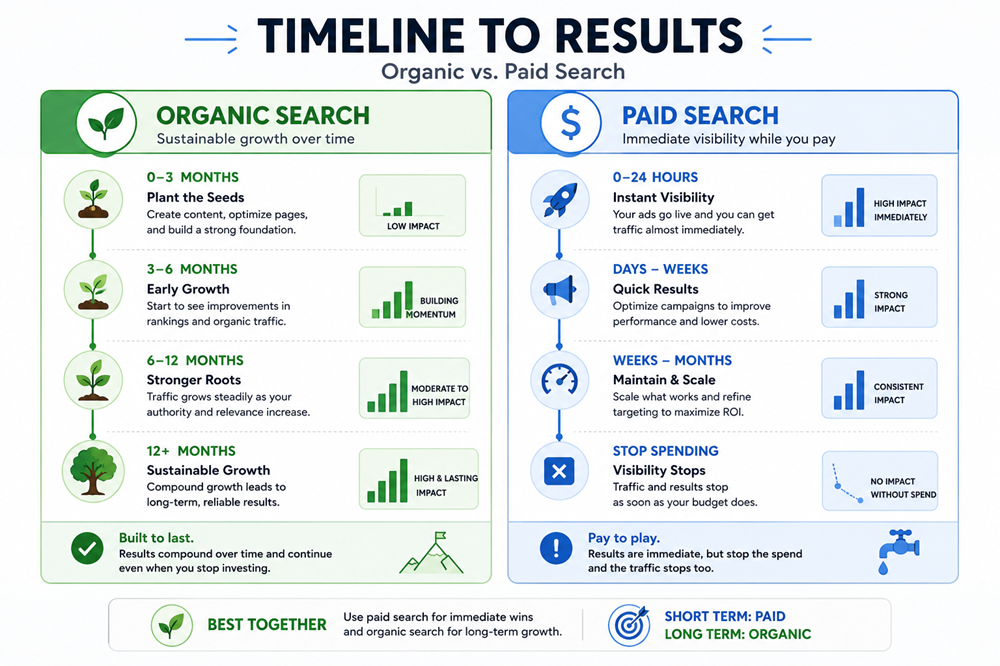
Before deciding where to put your money, it is helpful to understand the mechanics of each strategy. If you are new to this, you might ask about the seo full form, which is Search Engine Optimization. This is the art of improving your website so it ranks higher in organic search results for specific queries. It is a long-term play focused on building authority and trust with search engines like Google.
On the other side of the coin, we have ppc ads, which stands for Pay-Per-Click. This is a model of internet marketing where advertisers pay a fee each time one of their advertisements is clicked. Essentially, it is a way of buying visits to your site, rather than attempting to “earn” those visits organically. Both are essential components of a modern marketing mix, but they serve different immediate purposes.
The Case for Immediate Visibility with Paid Search
If your business is launching a new product or needs leads yesterday, paid strategies are often the go-to solution. When you partner with a specialized ppc ads agency, you gain the ability to appear at the very top of search results almost instantly. This “pay-to-play” model bypasses the time-intensive process of climbing organic rankings.
The precision of paid advertising is its greatest strength. You can target users based on their location, the device they are using, and the specific time of day they are searching. This level of control ensures that your budget is spent on the most relevant traffic possible. For many businesses, seeing a positive google ads result is the fuel they need to fund further marketing efforts.
Building Longevity Through Organic Optimization
While paid ads offer speed, organic optimization offers endurance. The primary goal of SEO is to create a website that search engines recognize as a valuable resource. When you rank highly in organic results, you aren’t paying for every individual click. This makes it a highly cost-effective strategy over the long run, as the cost per lead typically drops as your authority grows.
Organic rankings also tend to carry more “trust” with users. Many searchers instinctively skip past the “Sponsored” tags to find the first organic result, viewing it as a more credible recommendation. Investing in your site’s structure, content quality, and user experience creates an asset that continues to work for you even if you stop spending money on ads for a month.
When to Choose PPC for Your Business
Paid advertising is generally the best starting point if you have a clear, short-term goal. For instance, if you are running a seasonal promotion or trying to gain traction in a highly competitive local market, waiting six months for organic rankings might not be an option. It allows you to test keywords and offers quickly to see what resonates with your audience.
Many service-based businesses find success by launching a social media ad campaign alongside search ads. This multi-channel approach ensures that your brand is visible where your customers spend their time. Paid ads act as a temporary megaphone, making sure your message is heard while you work on the quieter, more permanent aspects of your digital presence.
Why SEO is a Non-Negotiable Long-Term Asset
No matter how much you spend on ads, your website needs a solid organic foundation. If your site is difficult to navigate or lacks helpful content, people who click on your ads will leave without converting. Organic optimization forces you to improve the overall health of your website, which benefits all your marketing channels.
The landscape of search is constantly shifting. Understanding seo then vs seo in 2026 reveals that search engines are becoming much more focused on user intent and helpfulness rather than just keywords. By focusing on organic growth now, you are future-proofing your business against rising ad costs and changes in platform algorithms.
Comparing the Costs: Budgeting for Success
Budget is often the deciding factor for small to medium enterprises. With ppc ads services, you need a daily budget for the clicks themselves plus a management fee if you are hiring professionals. The moment the budget runs out, the traffic stops. This requires a consistent cash flow to maintain visibility.
Organic optimization requires an upfront investment in content and technical fixes, but the “rent” is free once you occupy those top spots. While it takes longer to see the needle move, the ROI (Return on Investment) of organic traffic often outpaces paid traffic over a two-year period. Taking the one step-up into professional SEO ensures your budget isn’t just spent, but invested in a digital asset.
Finding the Middle Ground: The Hybrid Approach
The most successful businesses rarely choose just one. Instead, they use a hybrid strategy. You can use paid ads to dominate the search results for high-converting keywords while simultaneously building organic content for broader, educational topics. This ensures you are capturing customers at every stage of their journey—from the initial “how-to” search to the final “buy now” intent.
By analyzing the data from your paid campaigns, you can identify which keywords actually lead to sales. You can then take that data and use it to inform your organic content strategy. This synergy prevents you from wasting time creating content for keywords that don’t actually convert, making your overall marketing spend much more efficient.
Selecting the Right Partner for Your Journey
Navigating these choices can be overwhelming, especially when you are trying to run a business at the same time. Whether you need a team to manage your daily bids or a consultant to overhaul your site’s technical health, finding a reliable ppc ads agency or optimization expert is crucial. They can provide the data-driven insights needed to decide which channel deserves more of your budget at any given time.
The right strategy is never “set it and forget it.” It requires constant monitoring, tweaking, and adapting to how your customers behave online. By starting with a clear understanding of your goals—whether that is immediate leads or long-term brand authority—you can build a marketing plan that grows as your business does.
Summary and Final Thoughts
There is no “one size fits all” answer to the SEO vs. PPC debate. If you need immediate results and have the budget to sustain it, paid ads are a fantastic tool. If you are looking to build a sustainable, trustworthy brand that generates leads for years to come, organic optimization is the way to go. Most businesses find their “sweet spot” by using a combination of both to cover all their bases.
Ultimately, the best time to start was yesterday; the second best time is today. By evaluating your current business needs against the strengths of these two powerful strategies, you can take a confident step toward digital growth and long-term success.
Frequently Asked Questions
Is SEO better than PPC for small businesses?
Neither is objectively “better,” but SEO provides a higher long-term ROI while PPC offers immediate lead generation.
How long does it take to see results from SEO?
Most businesses start seeing significant organic growth within 4 to 6 months of consistent optimization.
Can I stop doing PPC once my SEO is good?
You can, but many keep both to occupy more “real estate” on the search results page and beat competitors.
Is PPC more expensive than organic search?
In the short term, PPC has higher direct costs per click, while SEO requires an investment in time and content.
Which strategy helps more with brand awareness?
PPC is great for reaching a new audience quickly, while SEO builds long-term authority and brand trust.
Pingback: Small Business Marketing: Strategies for Growth in India