
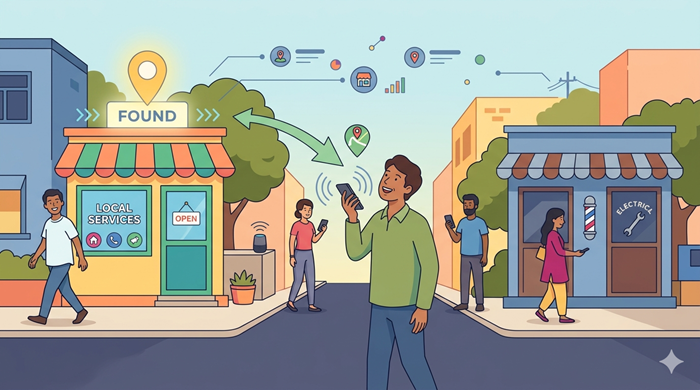
The way people find local companies has quietly shifted. A few years ago, looking for a local service meant typing a quick phrase into a search bar and browsing a list of websites. Today, a growing number of people simply speak to their phones or smart speakers to get immediate recommendations.
For many enterprises across the country, this shift has introduced an unexpected challenge. Traditional websites that used to rank well on standard search result pages are suddenly seeing less traffic. The reality is that Indian small businesses are losing a steady stream of local leads because their digital presence is built for screens, not for spoken conversations.
When a user relies on a voice assistant, they rarely look at a long page of search results. They usually receive just one definitive answer. If your company is not optimized to be that single response, you effectively disappear from that user’s view. Fortunately, adapting to this change does not require an entire technical overhaul. By understanding how conversational queries work, you can update your online presence and reclaim those missing leads.
The Hidden Shift in Local Consumer Behavior
The rapid rise of affordable mobile data and accessible smartphones has transformed how consumers interact with technology. It is no longer just tech-savvy individuals using voice commands. Regular consumers, local shoppers, and busy professionals now use voice commands to find everyday services because it saves time and feels more natural.
This behavior introduces a completely different dynamic to local search. Typed queries are usually short and fragmented, like “pest control Mumbai.” Voice queries, however, mimic natural human speech, turning into full sentences like “where is the closest pest control service that can come to my house today?”
If your website only targets short, robotic keywords, voice assistants will struggle to match your content with these conversational questions. Businesses that fail to adapt run the risk of becoming invisible to a massive, active audience that is ready to buy but prefers to search hands-free.
Why Conversational Queries Change the Rules
Traditional search engine optimization focuses heavily on short-tail keywords and desktop formatting. This strategy worked well when users sat down at computers to type out their needs. Voice interactions change the rules because they rely heavily on location data and immediate intent.
Most voice queries happen on mobile devices while people are on the move. These users are typically looking for an immediate solution, whether that is a nearby restaurant, a local repair clinic, or an emergency service. They expect the voice assistant to give them the single best answer based on their exact location.
To stay competitive, your digital content must mirror how people talk. This means moving away from overly formal corporate language and focusing on direct, clear answers. If your website provides straightforward answers to common consumer questions, search engines are much more likely to pull your content for voice responses.
Practical Steps to Optimize for Spoken Search
Fixing this issue requires a deliberate pivot toward conversational optimization. The goal is to make it as easy as possible for search algorithms to read, understand, and extract information from your digital channels.
Claim and Optimize Your Local Profiles
Because most voice queries have a strong local intent, your Google Business Profile acts as the foundation of your visibility. Voice assistants rely heavily on map data and local business listings to answer queries that include phrases like “near me” or “open now.”
Make sure your business name, exact physical address, and phone number are perfectly consistent across the internet. Keep your operational hours updated, choose the correct business categories, and encourage satisfied clients to leave detailed reviews. A well-maintained local profile gives search engines the confidence to recommend your business.
Structure Content Around Direct Questions
Since spoken searches are naturally phrased as questions, your website content should follow the same pattern. Integrating clear questions and concise answers into your service pages makes your content highly eligible for featured snippets, which voice assistants frequently read aloud.
Consider creating dedicated resource pages that address common customer concerns, pricing queries, and service areas. Keep the initial answer brief and easy to understand, then follow up with more detailed context for users who decide to click through and read the full page.
Focus on Natural and Local Language
When people speak, they use casual language, local slang, and specific regional landmarks. Your content should reflect these natural variations to capture long-tail traffic effectively. Instead of just listing your city, mention specific neighborhoods, prominent landmarks, or well-known districts where you offer your services.
Using everyday language helps bridge the gap between formal search algorithms and real human behavior. It ensures that when someone asks for assistance using casual terms, your website stands out as the most relevant match for their geographical area.
The Cost of Staying Invisible in Local Results
Neglecting conversational search optimization can quietly erode your market share over time. You might not notice a sudden drop in your analytical dashboards, but you will miss out on the growing segment of new customers who rely entirely on voice technology.
When a competitor optimizes their platform for spoken queries, they essentially capture the top spot for mobile users. Over time, this shifts consumer habits away from older, established companies toward agile businesses that make themselves easy to find.
Adapting to this trend is no longer an optional luxury for companies aiming for long-term survival. Embracing this shift allows you to establish a strong foothold in your local area before the market becomes oversaturated with businesses trying to catch up.
Building a Resilient Digital Strategy
Succeeding in the modern market requires looking beyond a single traffic source. A truly resilient business integrates local optimization, mobile accessibility, and clear content creation into a unified approach that supports overall business growth.
For many owners, balancing daily operations while keeping up with changing search trends can feel overwhelming. Partnering with professionals who understand local market dynamics can save time and prevent costly trial-and-error mistakes. If you are looking to improve your online visibility, searching for professional digital marketing services near me can connect you with experts who can tailor a strategy to your specific business goals.
Every digital improvement you make builds a stronger foundation for your enterprise. By creating a clear, accessible online footprint, you ensure that your business remains top-of-mind for consumers, no matter how they choose to look for you.
Transitioning to a Mobile-First Approach
Voice commands and mobile devices are fundamentally linked. Since the vast majority of spoken searches occur on smartphones, your website must load quickly and perform flawlessly on smaller screens to retain the users who do click through.
A slow, clunky mobile experience frustrates visitors and signals to search engines that your platform might not be the best recommendation. Ensuring your site uses a responsive design, compresses large images, and features clean navigation directly supports your conversational search visibility.
Looking at real-world examples can offer valuable inspiration for this transition. For instance, studying a specific digital shift that grew a local industrial company demonstrates how prioritizing mobile users and modern search trends can completely revitalize an enterprise’s lead generation pipeline.
Understanding Your Changing Audience
To attract modern consumers, you have to look closely at how their buying habits evolve over time. Shoppers today value speed, convenience, and friction-free interactions above almost everything else. They expect accurate information within seconds of asking a question.
This expectation means businesses must develop a deep understanding of their core market. Aligning your digital outreach with the modern consumer journey ensures that you are providing valuable touchpoints at every stage of their decision-making process.
+-----------------------------------------------------------+
|               THE MODERN VOICE SEARCH JOURNEY             |
+-----------------------------------------------------------+
|                                                           |
|  1. Trigger Event  --> "I need an electrician right now." |
|                                                           |
|  2. Spoken Query   --> "Who is the best electrician near  |
|                         me that is open?"                 |
|                                                           |
|  3. AI Filtering   --> Assistant scans local map profiles |
|                         for high ratings & exact matches. |
|                                                           |
|  4. Single Answer  --> "Top-Rated Electrical is 1 km away |
|                         and has 4.9 stars. Call now?"     |
|                                                           |
+-----------------------------------------------------------+
When you focus on tailoring your message to different target groups, you create a more resilient marketing funnel. Implementing dedicated digital marketing for diverse businesses allows you to speak directly to various audience segments, addressing their unique pain points in the exact language they use every day.
Ultimately, your digital channels must serve your real-world patrons effectively. By focusing on the specific needs, preferences, and searching behaviors of your target customers, you can design an online experience that turns casual voice searches into long-term business relationships.
Future-Proofing Your Business Visibility
The underlying technology behind search engines is constantly advancing. As voice recognition software becomes more accurate and integrates deeply into AI-driven assistants, conversational queries will likely become the primary way people interact with local markets.
Getting ahead of this trend today positions your business as an established authority before the competition intensifies. It allows you to build up a history of positive reviews, clean data structures, and relevant content that search engines will trust for years to come.
Investing time into voice search optimization is essentially an investment in future-proofing your brand. By aligning your business with natural human communication, you make it easy for new clients to find you, learn about your services, and choose your business over the competition.
Frequently Asked Questions
What is voice search SEO and why does it matter?
It involves optimizing your online content so voice assistants can easily read it aloud to users.
How do Indian small businesses lose revenue from spoken queries?
They lose revenue when voice assistants recommend optimized competitors instead of their unoptimized listings.
What is the easiest way to start with voice search optimization?
The easiest starting point is fully claiming and updating your Google Business Profile with accurate info.
Why do small businesses need to focus on conversational phrases?
They need to focus on them because spoken queries use natural, full sentences rather than short keywords.
Is voice search only relevant for larger metro cities?
No, it is growing rapidly across tier-two and tier-three areas due to multilingual smartphone adoption.