
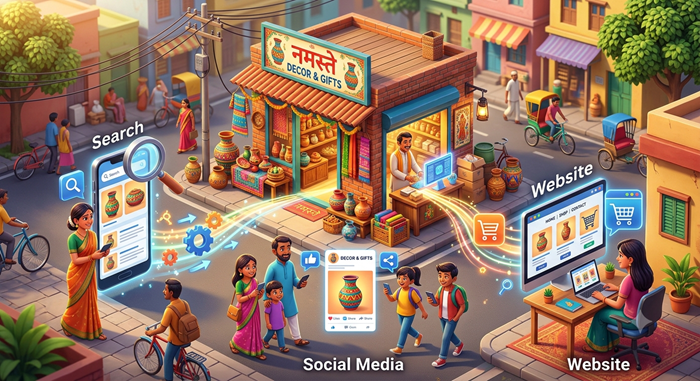
For Indian entrepreneurs, reaching the right customers is no longer limited to a shopfront, referrals, or traditional advertising. Customers now search online, compare brands, read reviews, watch videos, and check social media before making a buying decision. That is why small business marketing has become an important part of building visibility, trust, and consistent growth. Whether you run a local service, online store, professional practice, or growing startup, the right marketing strategy can help you compete with larger brands without requiring an unlimited budget.
Key Takeaways
- Small business marketing helps Indian businesses reach customers where they already spend time.
- A strong online presence can build credibility and generate qualified leads.
- Consistent small business marketing makes customer acquisition more predictable.
- The right strategy combines search, content, social media, paid campaigns, and conversion-focused websites.
Why Digital Marketing Is Important for Small Business
Traditional marketing can still have a place in a business strategy, but customer behavior has changed significantly. People increasingly use search engines, social platforms, maps, review websites, and online communities to find products and services.
This shift makes small business marketing more measurable and accessible. Instead of spending heavily on broad advertising, a business can target specific locations, customer interests, search queries, and buyer needs.
For example, a salon in Ahmedabad can focus on people searching for nearby beauty services, while a consultant in Bengaluru can publish content addressing specific business problems. The approach is more focused than simply advertising to a large audience.
Effective small business marketing also creates opportunities to build relationships before someone is ready to purchase. Helpful content, useful social posts, informative videos, and customer reviews can influence buying decisions long before a sales conversation begins.
How Digital Marketing Helps a Small Business Compete
Large companies often have bigger advertising budgets, established brand recognition, and extensive resources. However, size does not automatically guarantee customer attention.
A smaller company can compete by being more relevant, local, responsive, and specialized. Small business marketing allows businesses to concentrate their efforts on the audience most likely to become customers.
1. Reach Customers Where They Search
Search engines are often the starting point when people need a product or service. Optimizing your website and content around relevant searches can help your business appear when potential customers are actively looking for solutions.
This is particularly valuable for local businesses. Someone searching for a service in their city has a much stronger purchase intention than someone who simply sees a general advertisement.
2. Build Trust Before the First Conversation
Customers want to know whether a business is credible before spending money. Your website, reviews, social profiles, case studies, and educational content all contribute to that first impression.
Consistent small business marketing gives prospects more reasons to trust your expertise. When your online presence answers questions clearly and demonstrates knowledge, customers are more comfortable taking the next step.
3. Generate More Targeted Leads
Marketing is not simply about getting more visitors. The goal is to attract people who are genuinely interested in what you offer.
Search optimization, targeted advertising, content marketing, and landing pages can bring qualified prospects into your sales funnel. With the right tracking systems, you can also identify which channels are producing the strongest results.
The Main Digital Channels Small Businesses Should Consider
There is no universal marketing channel that works equally well for every company. Your ideal mix depends on your industry, customers, location, competition, and goals.
Search Engine Optimization
SEO helps your website become more visible when people search for relevant products, services, questions, and local businesses.
For a small company, SEO can be especially useful because valuable rankings can continue bringing visitors without paying for every individual click. It also helps establish your brand as a useful resource within your niche.
The search landscape continues to evolve, making it important to understand developments such as google AI mode SEO and how search experiences are changing.
Content Marketing
Content gives businesses a way to answer customer questions and demonstrate expertise. Blog posts, guides, comparison pages, videos, and FAQs can all support the buying journey.
Good content should have a clear purpose. Instead of publishing articles simply to fill a blog, focus on topics your prospective customers actually search for or need help understanding.
Social Media Marketing
Social media can help businesses stay visible and create direct conversations with their audience. Depending on the industry, platforms such as Instagram, Facebook, LinkedIn, and YouTube can support awareness, engagement, lead generation, and customer retention.
The key is consistency. A business does not need to be active on every platform. It should focus on the channels where its audience is most likely to engage.
Paid Advertising
Paid campaigns can provide faster visibility than organic channels, particularly when a business has a new offer or wants to generate leads within a specific location.
However, paid advertising needs careful targeting, compelling landing pages, and ongoing optimization. Businesses should evaluate SEO or PPC based on their objectives, budget, competition, and expected customer lifetime value rather than treating one channel as universally better.
Why Local Visibility Matters in India
India’s market is diverse, with businesses serving customers across major cities, emerging urban centers, and local communities. For many companies, reaching customers in a specific service area is more valuable than attracting traffic from across the country.
Local search optimization can help businesses appear for location-specific searches and make it easier for potential customers to find contact details, services, reviews, directions, and other important information. For location-based businesses, small business marketing can connect local search visibility with real enquiries and in-store visits.
This makes small business marketing particularly valuable for dentists, restaurants, contractors, consultants, clinics, retailers, educational providers, real estate professionals, and other location-dependent businesses.
A strong local presence also gives smaller companies a chance to compete for searches where national brands may not be as relevant.
Turning Website Visitors Into Customers
Getting traffic is only one part of marketing. If visitors cannot quickly understand what you offer or how to contact you, marketing spend can be wasted.
Your website should clearly communicate:
- What your business offers
- Who you serve
- Why customers should choose you
- What makes your offering different
- How customers can contact or purchase from you
Strong calls to action are equally important. Depending on the business, that might mean requesting a quote, booking an appointment, calling the company, submitting a form, or purchasing online.
A well-designed website supports small business marketing by turning visibility into measurable business opportunities.
How Our Digital Marketing Agency Helps Small Businesses

Marketing becomes more effective when strategy, execution, and measurement work together. As a digital marketing agency in india, we help businesses develop practical online strategies designed around their audience and commercial goals.
Our approach can include SEO, content strategy, website optimization, local search, paid campaigns, and other digital channels depending on what the business actually needs.
Strategy Based on Business Goals
We start by understanding the business, its customers, competitors, services, and growth objectives. This helps identify which channels deserve attention rather than applying the same strategy to every company.
SEO and Content Development
We can identify relevant search opportunities and create content designed to answer customer questions while supporting commercial pages. The objective is to attract useful traffic, not simply increase visitor numbers. A consistent small business marketing strategy can help your website build authority and attract customers who are actively searching for your services
Website and Conversion Optimization
Marketing works better when the website supports the customer journey. We review important pages, calls to action, messaging, and user experience to identify opportunities to turn more visitors into enquiries or customers.
Performance Tracking
Data helps determine what is working and what needs improvement. Tracking leads, traffic sources, rankings, conversions, and campaign performance allows marketing decisions to become more informed over time.
Common Mistakes to Avoid
Even a good strategy can struggle when execution is inconsistent. One common mistake is trying to use every platform simultaneously without enough resources to maintain quality.
Another is focusing entirely on follower counts or website traffic instead of leads, sales, enquiries, and customer retention.
Businesses should also avoid expecting immediate results from every channel. SEO and content can require sustained effort, while paid advertising may produce faster traffic but needs continuous budget and optimization.
Understanding SEO Then vs SEO now can also help business owners recognize why modern search strategies require more than simply adding keywords to web pages.
With the right planning and consistent execution, small business marketing can become a reliable part of your long-term growth strategy
Building a Sustainable Marketing Strategy
The strongest results usually come from consistency rather than isolated campaigns. A business can start with a few high-impact activities and expand as it learns what works.
For example, a local company might begin by improving its website, optimizing local search visibility, publishing useful content, and building a review strategy. Once those foundations are stronger, it could add paid campaigns or social media initiatives.
The purpose of small business marketing is not to follow every new trend. It is to create a repeatable system that attracts the right audience, builds trust, generates enquiries, and supports long-term growth.
For Indian businesses competing in increasingly digital markets, small business marketing is no longer simply an optional promotional activity. It is part of how customers discover, evaluate, and choose businesses.
When small business marketing is aligned with clear goals, the right audience, useful content, strong search visibility, and a conversion-focused website, even a smaller company can build a meaningful online presence.
Frequently Asked Questions
1. Why is digital marketing important for small businesses?
It helps small businesses reach targeted customers, build credibility, generate leads, and measure marketing performance.
2. What is the best digital marketing strategy for a small business?
The best strategy depends on the business, but SEO, content, local search, social media, and targeted advertising are common starting points.
3. How much should a small business spend on marketing?
The appropriate budget varies by industry, goals, competition, and revenue, so businesses should start with measurable objectives and scale what works.
4. Can SEO help a small business compete with larger companies?
Yes, focused SEO can help smaller businesses compete for relevant searches, particularly within specific niches and geographic markets.
5. How long does digital marketing take to produce results?
Paid campaigns can generate visibility quickly, while SEO and content typically require consistent effort before significant results develop.
Pingback: Google Ads vs Facebook Ads: Best for Indian Small Businesses